
Federated learning in forest resource modelling and monitoring: Bridging data confidentiality and collaborative research
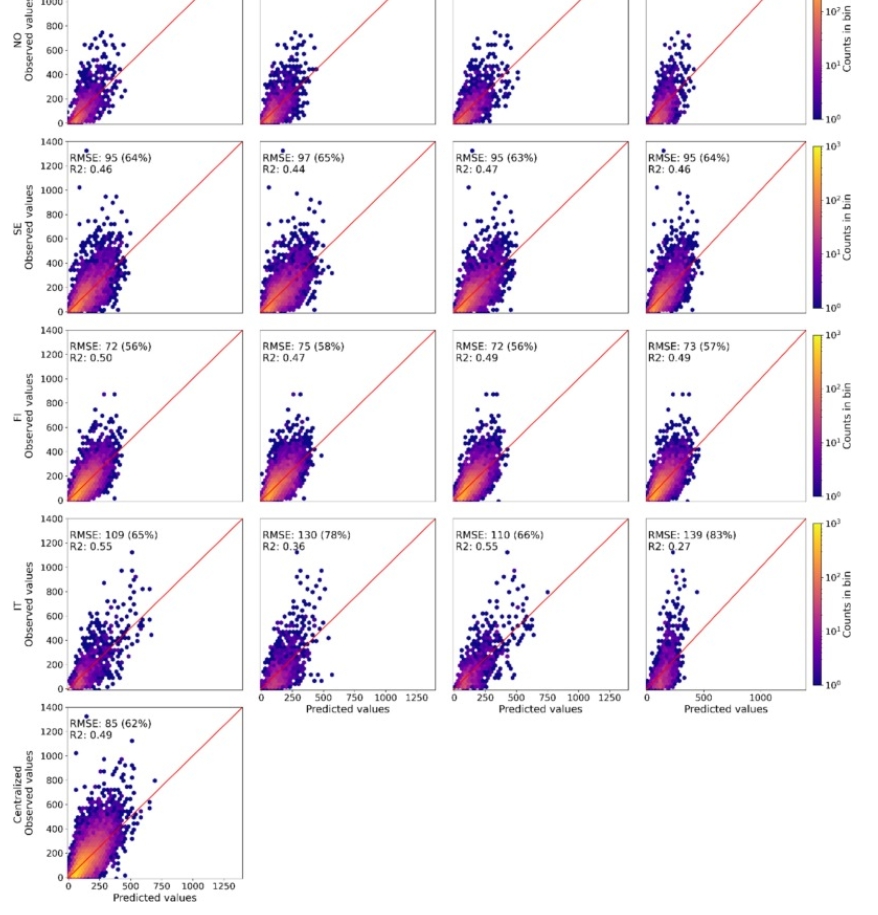
The availability of reliable ground-truth data is one of the main bottlenecks for improving high-resolution forest attribute maps from Earth observation data. This is underpinned by the European Union (EU) Forest Strategy for 2030 that underscores the need for harmonized, cross-border forest resource assessments that integrate both remote sensing and field-based National Forest Inventory (NFI) […]
Cross-country patterns of compositional and structural forest diversity across European regions
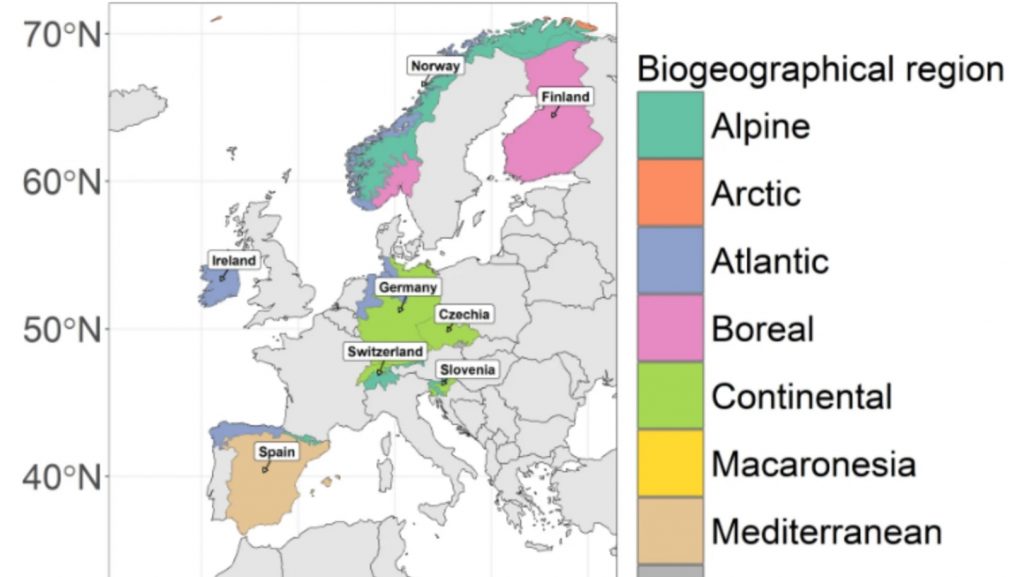
Forest diversity is a multidimensional concept comprising different components such as species diversity, functional diversity, structural diversity and genetic diversity. These diverse elements are recognised as being connected to the health and functioning of forest ecosystems and human well-being. However, information on forest diversity at broad spatial scales is scarce. Thus, the primary goal of […]
Model-based small-area estimation with area-effects for sampled and non-sampled domains
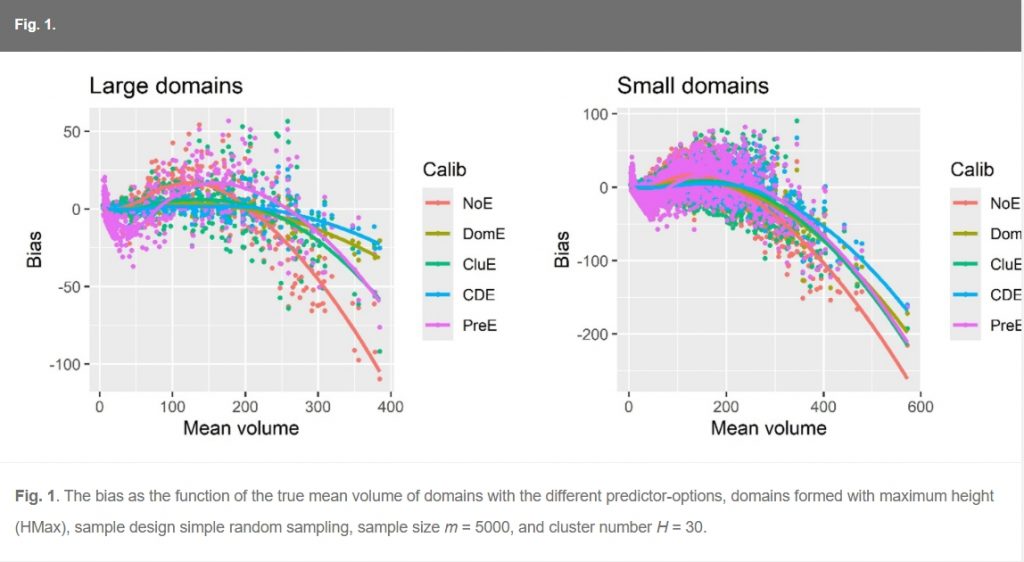
Previous studies recommend the empirical best linear unbiased predictor (EBLUP) for small-area estimation. However, EBLUP estimation requires at least one observation from each small area, while most of the areas may be non-sampled. One approach to overcome this problem is to predict the area-effects for the non-sampled areas with a model developed using the estimated […]
Differences in anthropogenic greenhouse gas emissions estimates explained

We examine differences in global and national greenhouse gas (GHG) emissions estimates, focusing on the role of varying system boundaries and conceptual approaches in driving these variations. Despite consensus among assessments and datasets that GHG emissions continue to increase and that trends are far from aligned with the Paris Agreement goals, estimates can differ significantly. […]
A race to net zero: Framings and perceptions of (in)justice in the political discourse related to the EU’S Land Use, Land Use Change and Forestry Regulation

The integration of climate targets into EU forest governance is politically contentious, with policy actors pursuing conflicting objectives through justice-based claims of victimisation and marginalisation, often resulting in intractable conflicts. This paper examines how justice is framed and perceived by policy actors in political debates concerning the EU’s Land Use, Land Use Change, and Forestry […]
Large-scale forest resource mapping with spatial gaps in the training data: Comparison of different modeling approaches
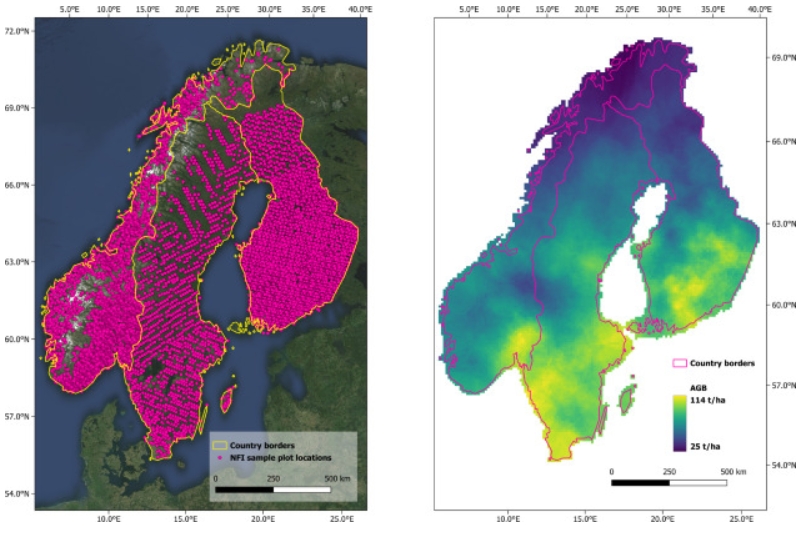
Forest attribute maps are essential for supporting local decision-making regarding forest resource use. Such maps are produced by combining remote sensing and field data through various modeling approaches. When mapping across large areas, spatial gaps in field data used for model training are common. Our study evaluates the performance of three methods-Nearest Neighbor (-NN), Random […]